Drive has 700+ articles for digital transformation leaders written by StarCIO Digital Trailblazer, Isaac Sacolick. Learn more.

IoT isn’t just a capability you plug into an existing enterprise architecture. It requires validating existing capabilities and investing in new foundational ones. And what is needed depends on whether the business has done any data integrations with sensors before, the volumes and types of data being collected, and whether the business opportunities around IoT are customer facing.

Industries have different experiences with sensors and IoT

There are some organizations that have been digitizing the physical world for some time. They include manufacturing, facilities management, and industrial companies that have historically used sensor technologies to report and control the operational environments. While IoT enables a lot more data and real time collaboration, some businesses in these industries have had a head start in the business, operational, and technology practices that enable using sensor data at scale.

Other industries have sensor data, but opening up this data to consumer facing applications creates new challenges. Many healthcare, entertainment, education, retail, and auto companies fall into this category.

Then there are companies that haven’t had must business need for sensor data. Some are in the financial services, media, and professional services industries.

Foundational practices across all industries

Here is my list of key foundational practices all industries need to consider when establishing IoT backed products and services.
  • Data streaming – The ability to collect, process, and manage data in real time. While engineers will focus on the volume and velocity of data when considering data infrastructure requirements, a more important design consideration is what types of decision making, analytics, or algorithms need to run in real time. This leads to questions around algorithm selection, edge computing capabilities, and sensor reliability.
  • Business and technology partnering – IoT requires stitching together technologies and services from multiple business and technology partners. It isn’t something you just send to the IT group to architect and assemble. For many organizations, selecting the right partners and integration strategies will stretch their existing vendor, architecture, integration, and procurement practices.
  • Data security – For many organizations, data security was largely about protecting enterprise data assets behind firewalls and in managed data center and cloud environments.While some IoT is deployed on enterprise networks and facilities like in manufacturing and industrial use cases, others are in more open environments. In addition, since much of IoT is delivered through vendor devices, third party technologies, and vendor services, having a security practice that can evaluate the end to end platform for data security and other risks represents a new set of challenges.
All this means is that many organizations will have to invest in foundational capabilities before bringing new IoT backed product and services to production.

Published on:

Leave a Reply


StarCIO

My company, StarCIO, provides leadership, learning, and advisory programs for companies looking to accelerate delivering business value from digital transformation. Contact me if you’d like to learn more about partnering opportunities.


Isaac Sacolick

Join us for a future session of Coffee with Digital Trailblazers, where we discuss topics for aspiring transformation leaders. If you enjoy my thought leadership, please sign up for the Driving Digital Newsletter and read all about my transformation stories in Digital Trailblazer.


Coffee with Digital Trailblazers hosted by Isaac Sacolick

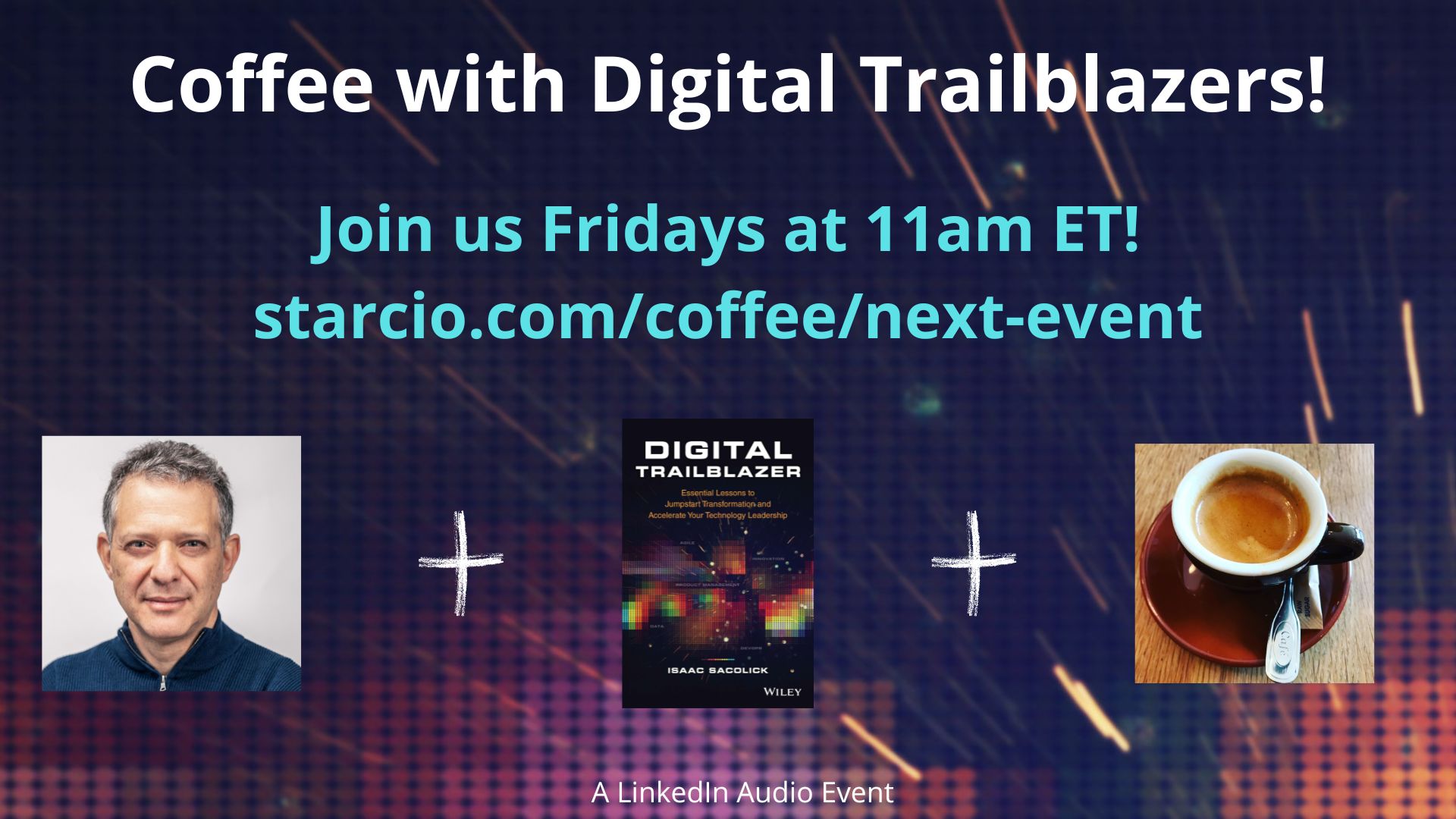
Digital Trailblazers! Join us Fridays at 11am ET for a live audio discussion on digital transformation topics:  innovation, product management, agile, DevOps, data governance, and more!


Join the Community of StarCIO Digital Trailblazers

About Drive

Drive Agility, Innovation, Transformation

Drive is the blog for digital transformation leaders brought to you by StarCIO and Isaac Sacolick.

Agility, Innovation, and Transformation are the three primary digital transformation core competencies that every StarCIO Digital Trailblazer must champion in their organizations. Learn more About Drive.


About the StarCIO Digital Trailblazer Community

StarCIO Digital Trailblazer Community

Revolutionizing traditional learning, networking, and advising experiences.

Visit the community


About StarCIO

StarCIO

About Isaac Sacolick

Isaac Sacolick

Author, 1,200+ articles, keynote speaker, Chief StarCIO Digital Trailblazer. Full bio


Driving Digital Newsletter

Driving Digital Newsletter

StarCIO Guides

StarCIO Agile Planning Guides

Digital Trailblazer

Digital Trailblazer by Isaac Sacolick

Driving Digital

Driving Digital by Isaac Sacolick

Driving Digital Standup

Driving Digital Standup

Coffee with Digital Trailblazers

StarCIO Coffee With Digital Trailblazers

Recognition

reworked imapct awards 2026 Judge
InfoWorld 2025 Judge
InfoWorld Technology of the Year 2024 Judge
Thinkers360 Top 10 in IT Leadership
Thinkers360 Top Agile Thought Leader
Thinkers360 Top DevOps Leader
Thinkers360 Top in Digital Transfomation
Thinkers360 Top in Analytics
Thinkers360 Top in Product Management

Discover more from StarCIO Digital Trailblazer Community

Subscribe now to keep reading and get access to the full archive.

Continue reading