Category: Solutions, Enterprise Architecture
-
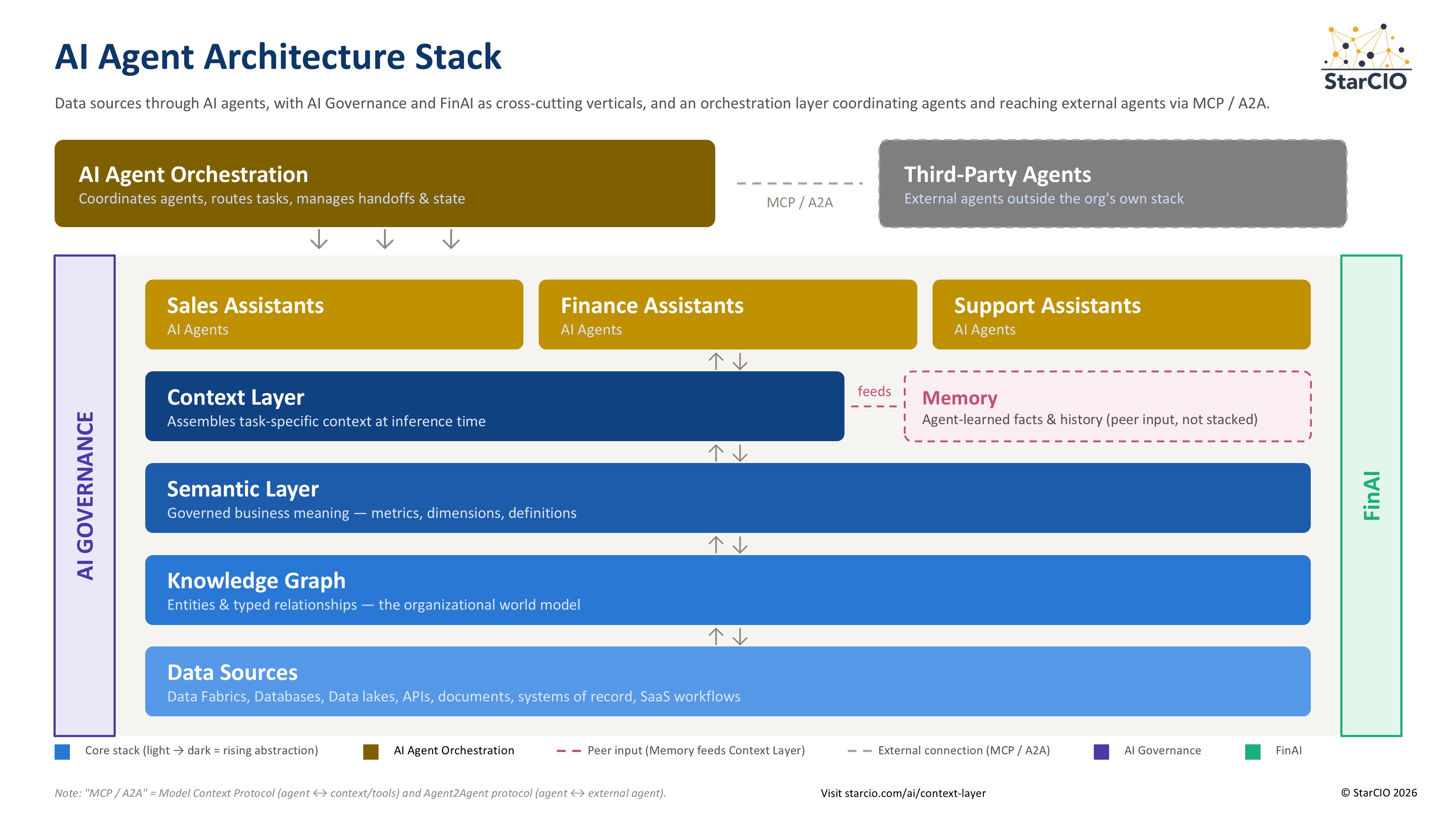
Building the AI Agent’s Brain: Knowledge Graphs vs. Semantic Layer vs. Context Layer
Confused by the jargon on the context layer surrounding the AI agent’s brain? What’ the diffeence between knowledge graphs, the semantic layer, and and the context later? What AI governance is required, and how can organizations develop the AI brain iteratively?
-

Technology Selections in the AI Era: 7 Criteria to Evaluate a Vendor’s Ecosystem
Organizations struggle with technology selection in the AI era, often facing integration issues or overanalyzing criteria. Misjudging value and risk can lead to AI debt. Evaluating technology must focus on value, risk, and ecosystem, considering factors like data portability, integration capabilities, community sentiment, and leadership accessibility to ensure long-term success.
-
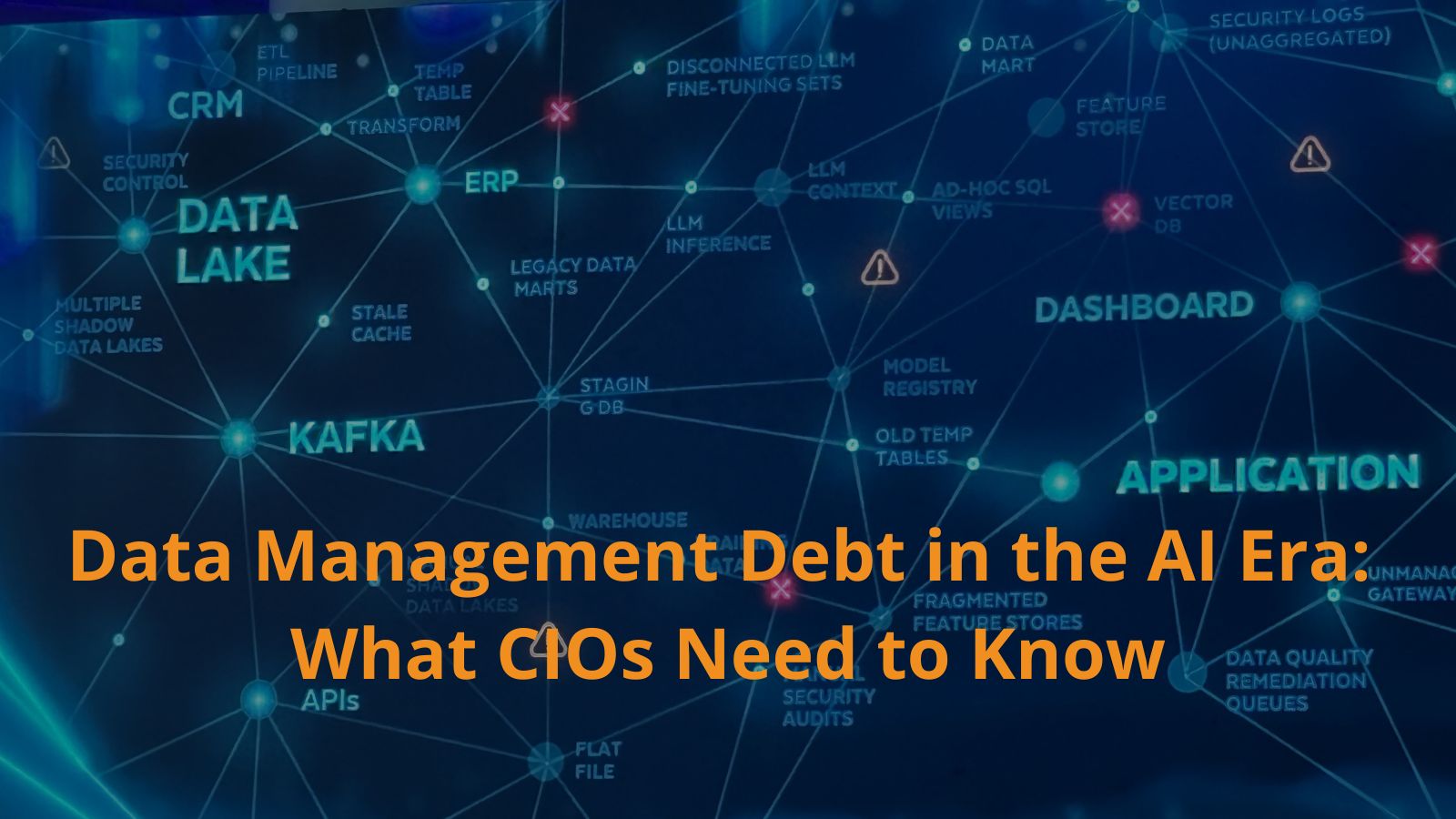
Data Management Debt in the AI Era: What CIOs Need to Know
CIOs in large enterprises and SMBs face significant data management issues, often referred to as data management debt, which complicates AI initiatives. Poor data governance and reliance on various tools hinder productivity. Snowflake offers solutions such as CoCo for data builders and CoWork for knowledge workers, aiming to streamline data handling and promote centralized data…
-
Critical Process Management in the AI Era: What CIOs Need to Know
Matthew Calkins, CEO of Appian, advocates for a pragmatic approach to integrating AI in mission-critical processes, emphasizing risk management and defined workflows. He warns against fully autonomous AI in regulated industries. A spec-driven development framework that encourages collaboration and minimizes errors, enhances the overall effectiveness of AI applications.
-
AI Agents Transforming? Not Yet. Here is What CIOs Must Lead Now
While we are in the genAI era, many organizations have not achieved AI-driven transformation. Most AI agents drive efficiencies and are reshaping businesses, but not transforming their customer experiences. IT departments must evolve their practices to leverage AI effectively. Without significant changes in leadership, culture, and agile practices, businesses will be slow to achieve true…
-
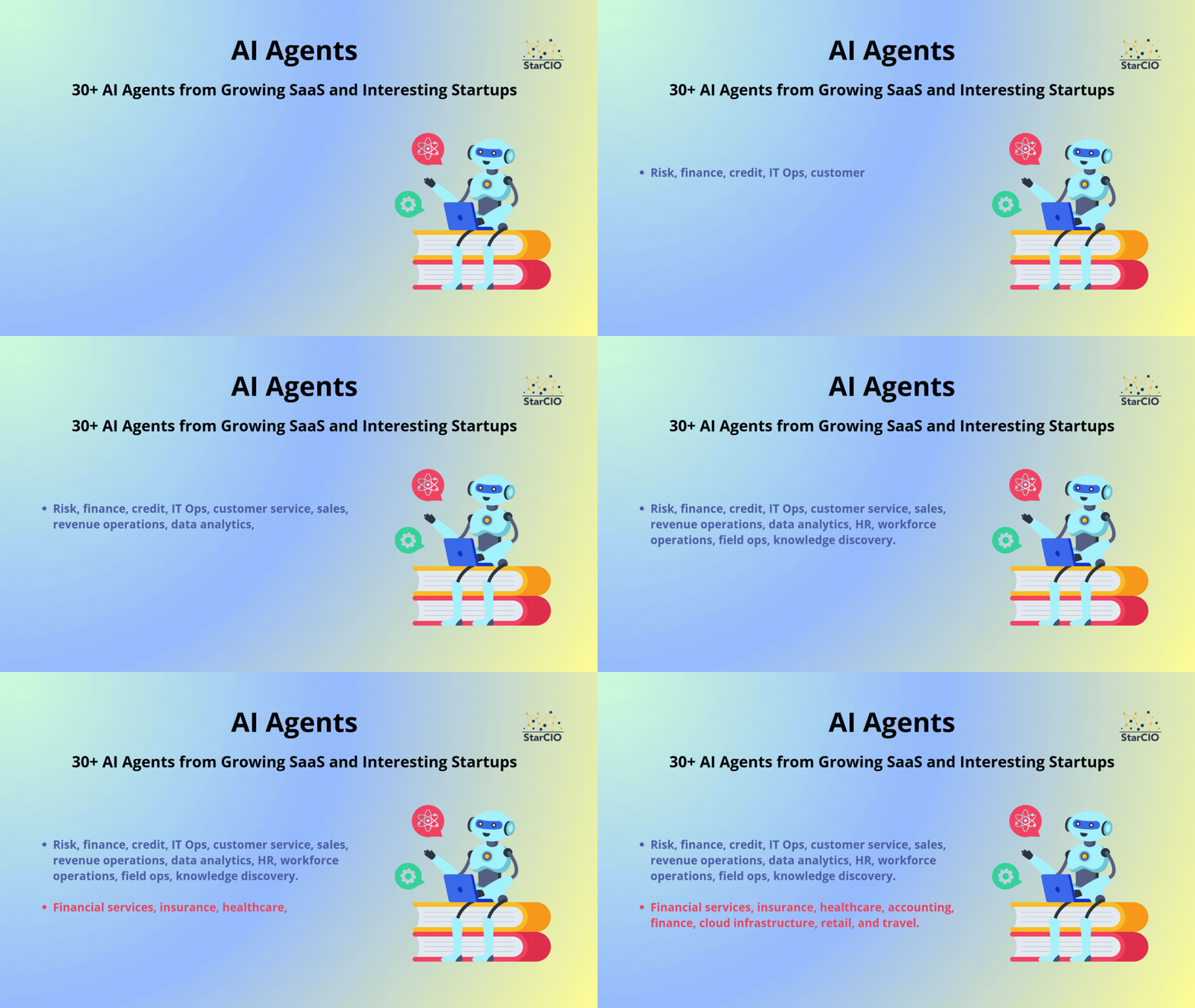
30+ AI Agents from Growing SaaS and Interesting Startups
Startups and growing SaaS, are developing AI agents that span chatbots, human-AI collaborations, and agentic AI automations. A comprehensive list categorizes these agents by industry and function, showcasing innovations that automate tasks across various sectors, such as finance, healthcare, and customer service, ultimately revolutionizing the workplace.
-
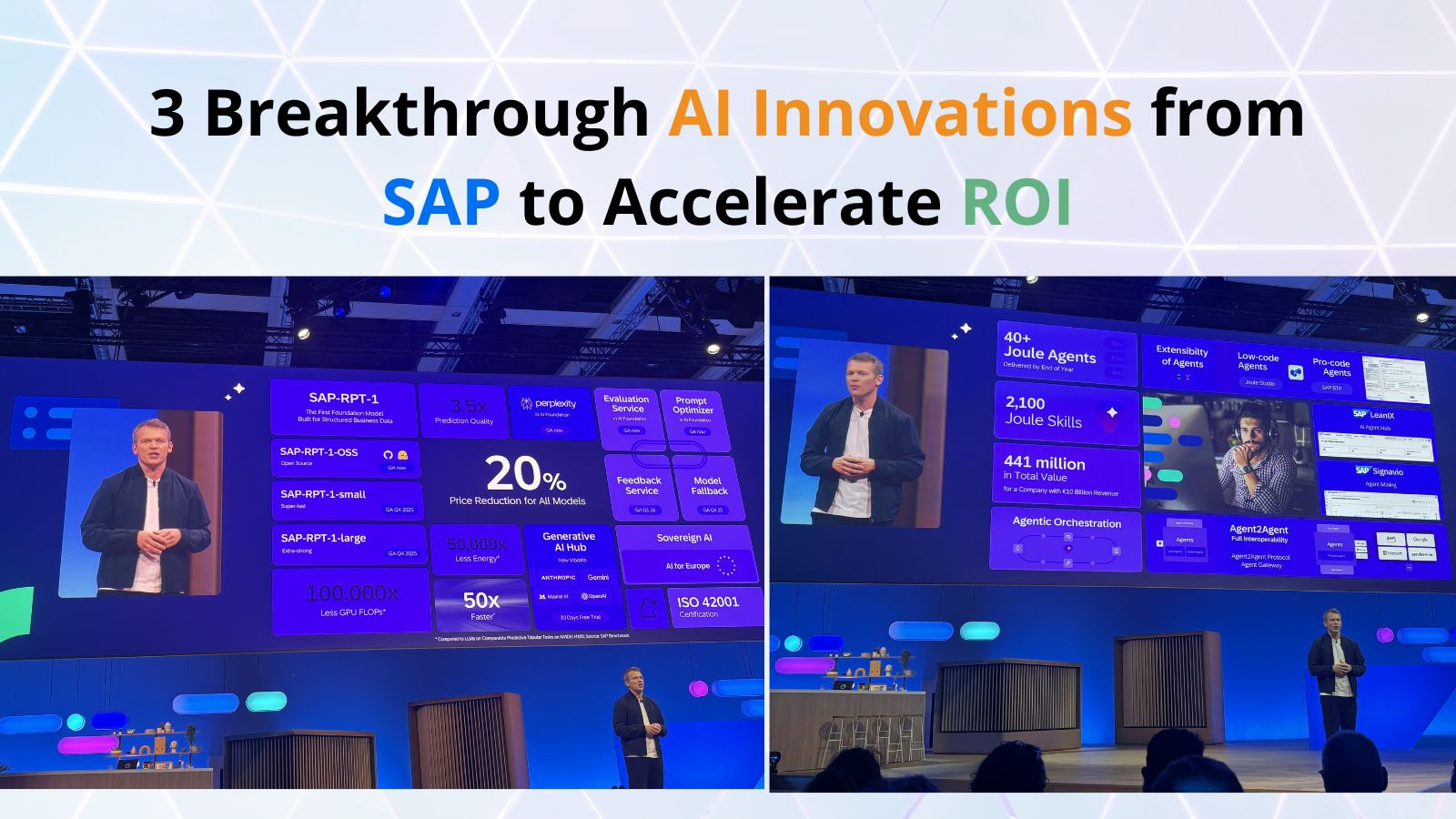
3 Breakthrough AI Innovations from SAP to Accelerate ROI
CIOs are under pressure to demonstrate AI investments ROI and business value. While AI job impacts and integration challenges exist, improving developer productivity and agile team velocity can yield better ROI. SAP’s Business Technology Platform offers tools and innovations to accelerate AI implementation and adoption across enterprises, driving digital transformation.
-
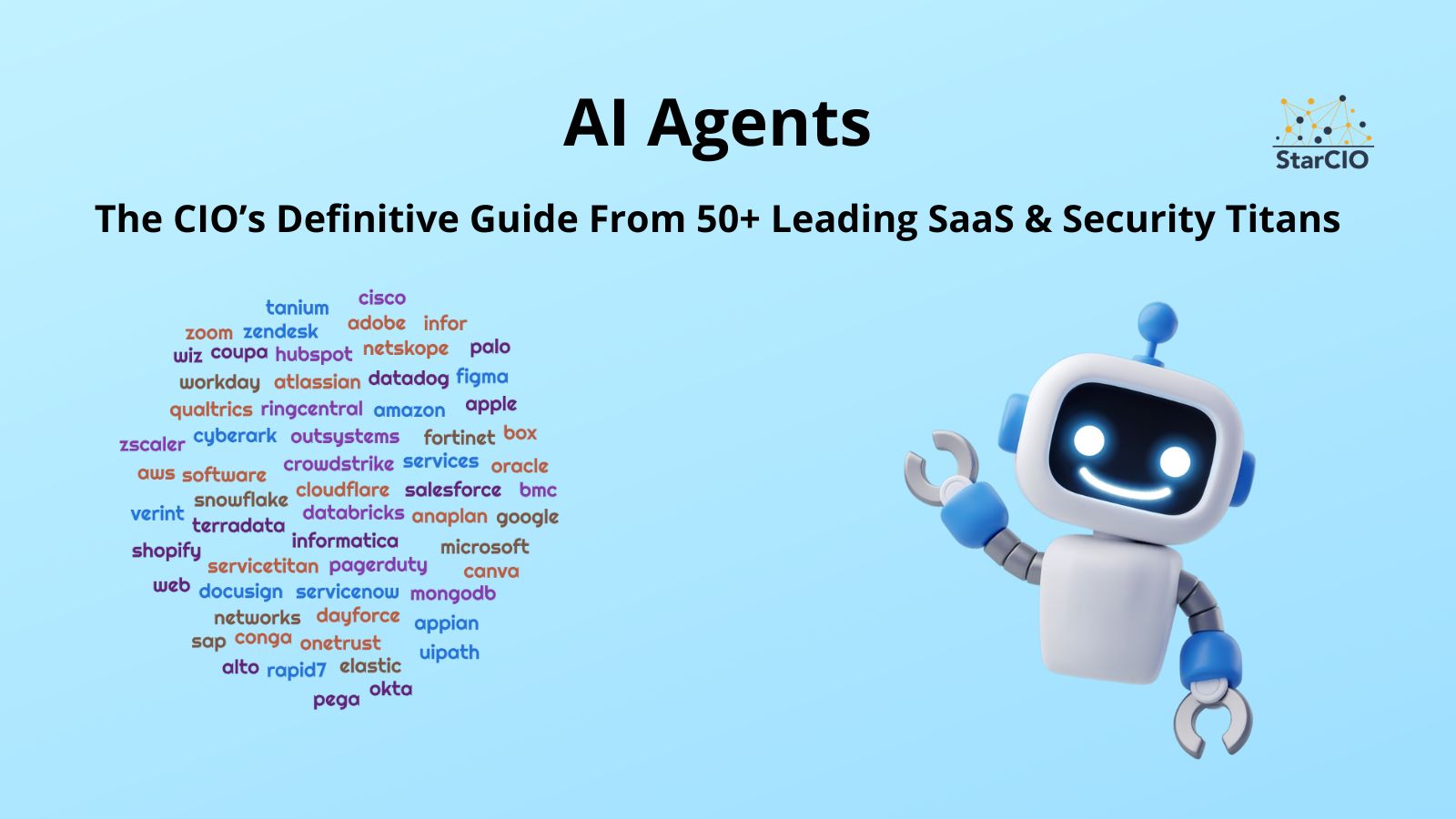
AI Agents: The CIO’s Definitive Guide From 50+ Leading SaaS & Security Titans
A comprehensive list of AI agents for CIOs from major tech and security firms exceeding $500M in ARR. It highlights the importance of differentiating between agentic AI and standard chatbots, while offering recommendations for CIOs on effectively integrating AI agents into existing workflows and governance strategies for optimal business outcomes.
-
From Vision to Value: A Practical Blueprint for Developing AI Agents
Organizations are increasingly developing strategic AI agents to enhance customer and employee experiences. A hybrid approach involving both build and buy methods is essential for success. Key steps include defining roles, unifying information access, connecting to APIs, and implementing continuous testing. Avoiding development pitfalls will drive effectiveness and improve satisfaction across various sectors.
-
10 Important AI Architecture Rules You Can’t Ignore in the GenAI Era
Experts share essential rules for AI architecture, emphasizing the significance of incremental AI implementation, flexibility, and robust governance. Architects should avoid rigid requirements, ensure data integrity, design modular systems, and prioritize reliability through continuous monitoring. These principles facilitate the successful integration of AI while minimizing future technical debt and risks.
-

How My Breakthrough Course Will Empower Digital Transformation Leaders in the AI Era
Digital transformation is now more crucial than ever in the AI era, shifting from a project mindset to an ongoing strategy for organizations. The introduction of AI enhances the need for continuous evolution in business operations, with leadership programs focusing on integrating AI, facilitating culture change, and tracking meaningful outcomes.
-

SAP Bets Big on AI Agents—Should CIOs Follow?
At Sapphire 2025, SAP introduced 40 AI agents and a Business Data Cloud to address integration challenges for CIOs. Emphasizing productivity, SAP aims for strategic AI investments for decision-making in rapid data environments, asserting the end of traditional best-of-breed application and integration approaches.