

Category: Future of Work
-
Trusting AI Agents: What CIOs Need To Know
CIOs facing pressure to deliver AI business value will need trusted platforms for agent development, especially for backoffice HCM and ERP data. At Workday Rising 2026, executives announced the Workday Trusted Agent Platform, 17 job-based AI agents, and new strategic Decision Intelligence agents for the CHRO, CFO, and CIO offices.
-

Driving AI Culture Change: What CIO’s Need to Know
At the Cisco WebexOne 2026 conference, executives highlighted the lack of top-down AI transformation, emphasizing the need for strategic development over mere productivity gains. Cisco’s approach involves empowering employees through experimentation while fostering a culture of curiosity and focus, which is essential for effective AI-driven transformation. Report by Isaac Sacolick from WebexOne 26.
-
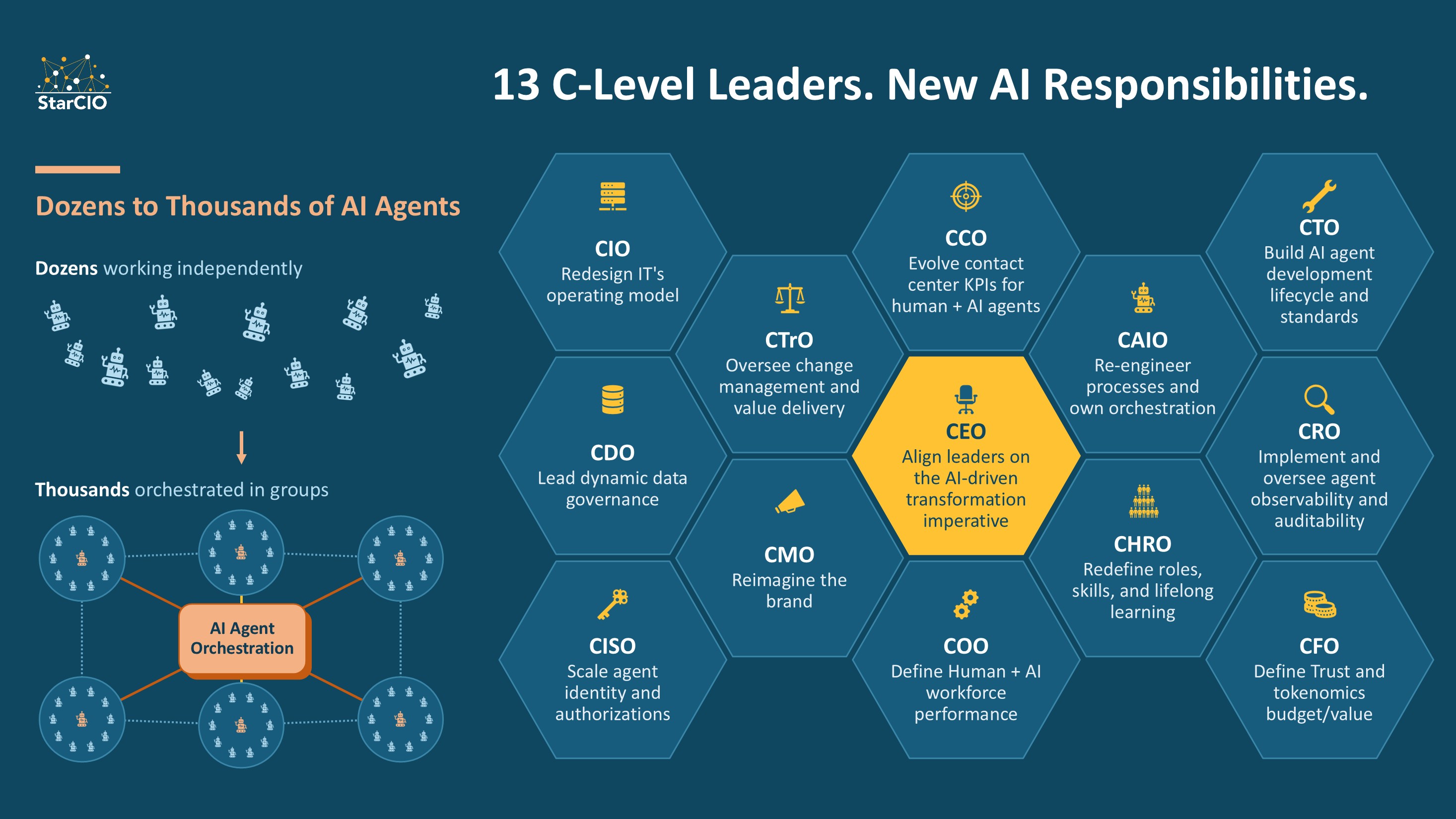
Dozens to Thousands of AI Agents: The 13 C-Level Leaders With New Responsibilities
Exponential increases in deployed AI agents requires new C-level leadership roles around growth, architecture, people/process, and risk management. CEOs have to lead responsibility assignments and setting a transformation imperative. StarCIO proposes responsibilities for CIO, CDO, CISO, CTrO, CMO, CCO, COO, CAIO, CHRO, CTO, CRO, and CFO, and where they need to collaborate.
-

IT Service Operations Is Ready For Its AI Moment
Legacy ITSM platforms hinder employees in mid-market businesses, causing delays in issue resolution. Embracing AI can significantly enhance IT service operations by simplifying processes, providing insights, and improving employee experiences. AI-driven ITSM platforms facilitate faster responses and enable employee self-service capabilities, making them crucial for modern organizations.
-
How to Accelerate AI’s Path to Business Value in Industrial SMBs
AI tools can boost individual productivity but require leaders to re-engineer workflows for ongoing business value. By fostering AI literacy among all employees and utilizing platforms, partners, and learning programs, organizations can empower staff to adapt and innovate. Successful AI adoption hinges on collaboration and employee engagement in dynamic workflows.
-

5 Ways AI Governance Lowers the AI Hallucination Tax
We define the “hallucination tax,” as costs incurred when AI outputs are incorrect but presented with confidence. Key strategies for managing this include developing a unified AI registry, establishing guardrails, and monitoring data contexts to enhance AI reliability and reduce costs. A recap of our recent Coffee With Digital Trailblazers with special guest Felix Van…
-

10 Signs of the AI Bubble Bursting and 7 Ways CIOs Should Prepare For It
The potential for an AI bubble to burst raises critical questions for CIOs on their AI strategy. While some deliver AI business value, many struggle with ROI and governance. 7 recommendations for CIOs include addressing detractors, catching up on AI governance, and addressing AI debt.
-
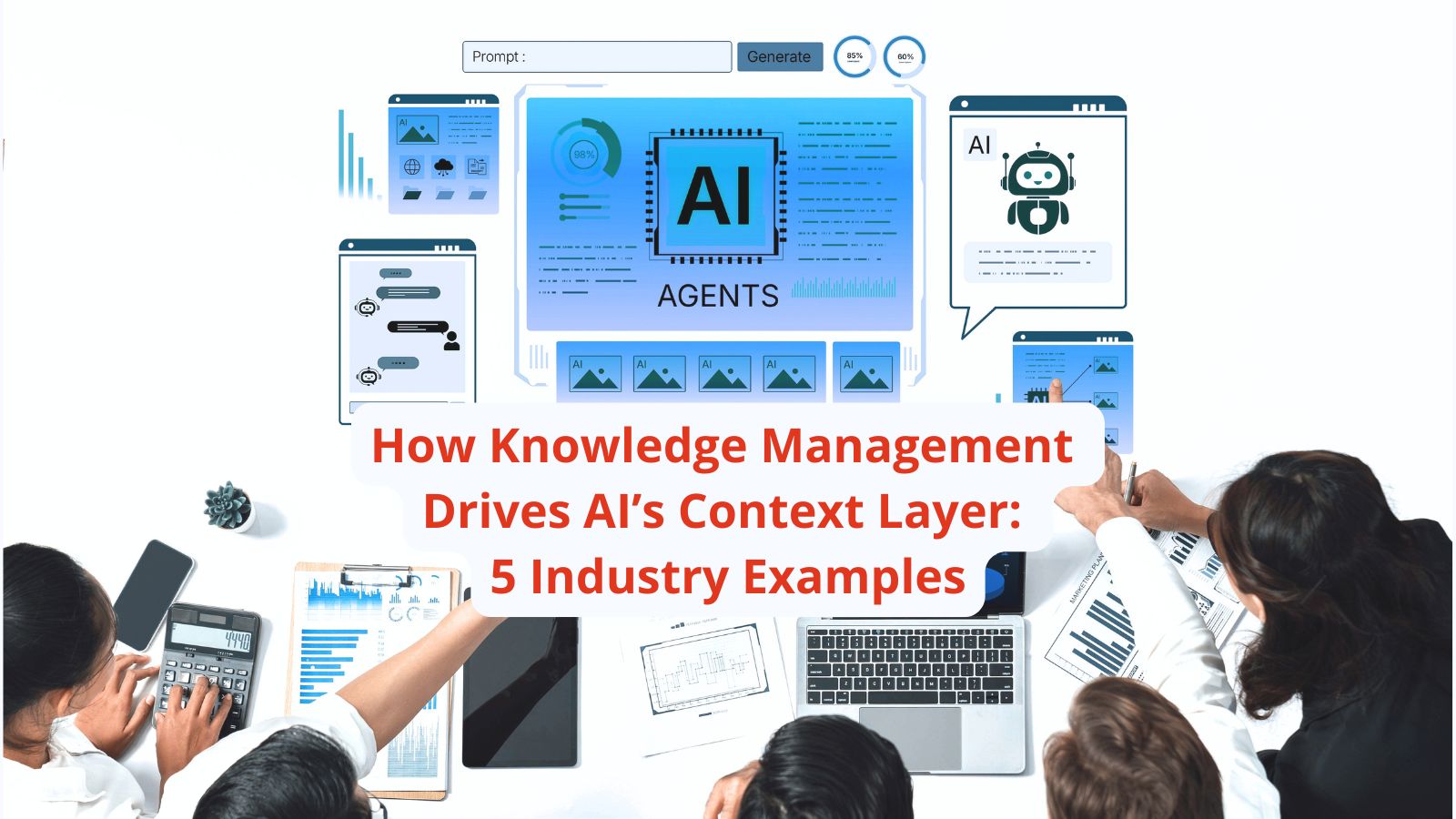
How Knowledge Management Drives AI’s Context Layer: 5 Industry Examples
Knowledge management is a key process for developing the AI’s context layer. The article explores opportunities and challenges in five industries: healthcare, financial services, construction, manufacturing, and higher ed. Common challenges include change management, executive alignment, data integration, and data governance. Opportunities include faster time-to-decision, improved CX, and enabling agentic AI operations.
-
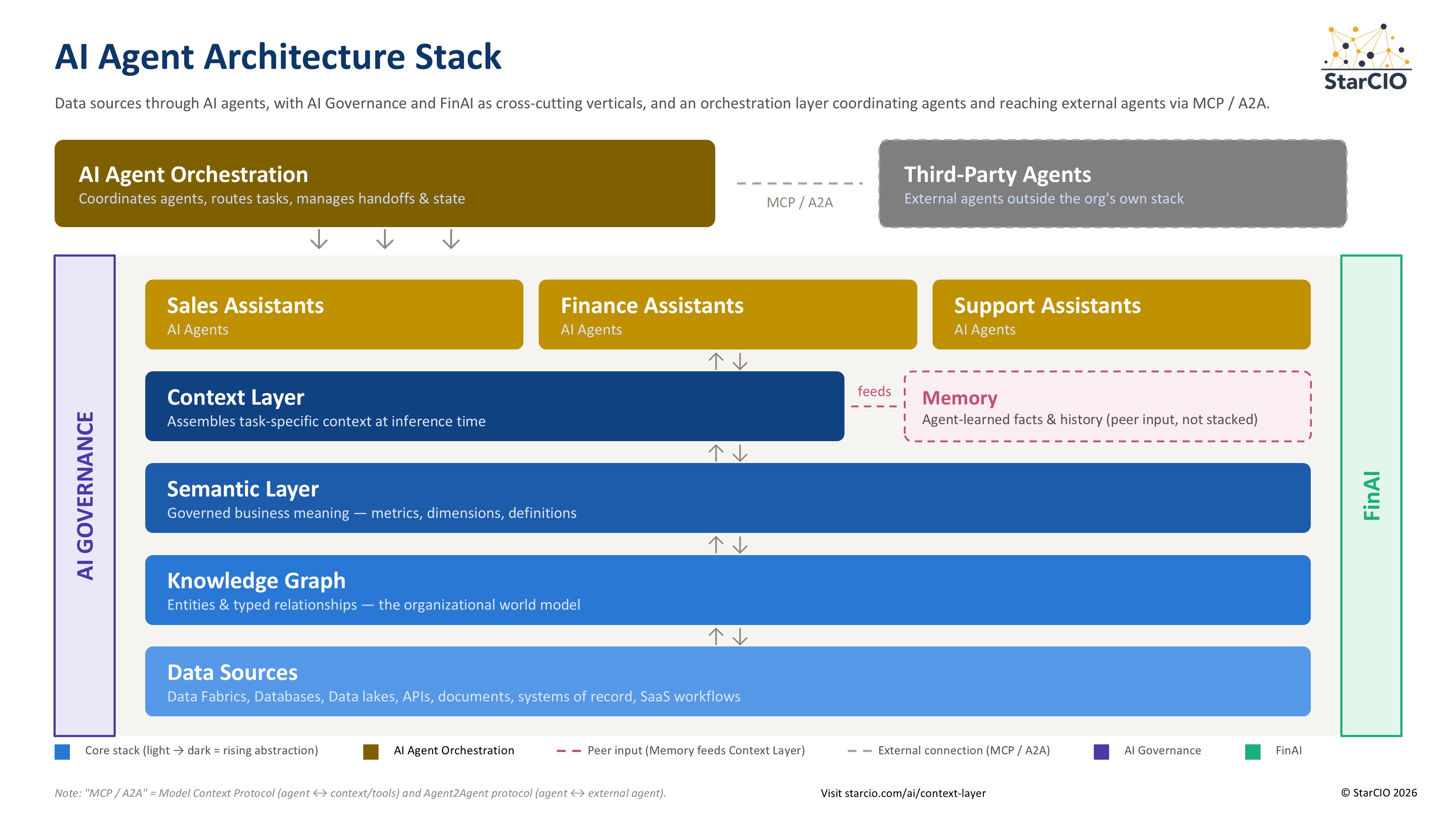
Building the AI Agent’s Brain: Knowledge Graphs vs. Semantic Layer vs. Context Layer
Confused by the jargon on the context layer surrounding the AI agent’s brain? What’ the diffeence between knowledge graphs, the semantic layer, and and the context later? What AI governance is required, and how can organizations develop the AI brain iteratively?
-

How Citizen Developers Should Respond to Allegations They Are Shadow IT
The role of low/no-code development can be significant in advancing a digital transformation strategy. It highlights the need for governance and best practices to prevent the perception of citizen development as shadow IT. Key strategies include defining building disciplines, prioritizing integrations, implementing security standards, documenting data assets, and controlling AI experimentation.
-

Technology Selections in the AI Era: 7 Criteria to Evaluate a Vendor’s Ecosystem
Organizations struggle with technology selection in the AI era, often facing integration issues or overanalyzing criteria. Misjudging value and risk can lead to AI debt. Evaluating technology must focus on value, risk, and ecosystem, considering factors like data portability, integration capabilities, community sentiment, and leadership accessibility to ensure long-term success.
-

AI Is Only as Good as Your Talent: Five Ways People Amplify Its Value
As AI transforms the workforce, organizations must adapt talent strategies to leverage human skills that machines cannot replace, such as critical thinking and ethical judgment. Cooperation between talent and AI enhances innovation and drives business value. Companies must prioritize skilled talent nurturing to maximize AI effectiveness, ensuring ongoing collaboration and expertise.