

CFOs are the most important ally to the CIO, and the CIO should be the CFO’s strategic planning, delivery, and transformation partner. They should collaborate on a portfolio of transformation initiatives, define standards of excellence, and seek ways to grow revenue and profitability.
But the CIO should not report to them in most situations.

CFOs have tremendous responsibilities overseeing the financial and accounting functions and often have accountabilities in operations, compliance, administration, and other leadership areas.
But IMHO, having the CIO and IT report to CFOs can be a disservice to customers, employees, shareholders, and especially those working in data, technology, product management, and innovation roles.
Tech’s primary charter is not just cost savings
Having the CIO report to the CFO (arguably) worked (sometimes) in the days before tech, data, and customer experiences were strategic business imperatives. But the reporting structure rarely works in an era where businesses must always be transforming.
Yes, I want CFO to be deeply involved as a key stakeholder in creating a digital transformation vision and execution plan. But in my experience, CFOs should share the table as an equal with other stakeholders, especially the CMO, CIO, CISO, GMs, and sales leaders. That’s hard to orchestrate, and the politics difficult to navigate if the CIO reports to the CFO. Call this reason number one.
And yes, cost savings, operational efficiencies, risk reduction, and quality improvements must be key elements of a CIO’s responsibilities, but they can no longer be a primary driver. And that’s where I believe the reporting structure creates problems – call it biases – when IT reporting into finance focuses on only one side of the financial equation. This is my second reason.
The optics of a CFO leading IT is a cultural billboard to the rest of the organization, even when CFOs proclaim the importance of innovation, experiences, and experimentation. Aspiring transformation leaders in product management, technology, or data roles (i.e., Digital Trailblazers) with a big idea see the buck stopping at the CFO. It often drives them to calculate ROI too early in the innovation process and have cost savings too front and center in their field of vision. That’s my third reason.
Cultural transformations are nearly impossible without CEOs directly involved
But the most important reason surrounds culture transformation and why, in most situations, CIOs leading digital transformation should report to the CEO.
CEOs have key roles in how the organization transforms to one where tech, data, and experiences become competitive advantages. They include
- Setting strategic priorities, especially when there’s conflict across the leadership team
- Leading the discussion with the board about transformation’s goals and ensuring all buy into realistic expectations and timelines
- Overseeing evolutions in incentives, especially when financial rewards shift from legacy to future business models
- Managing detractors, especially when other executives throw darts, drop boulders, and create other bureaucracies in innovation’s way
- Cheerleading success and reminding everyone that transformation requires agile experimentation for quick reinforcing feedback, lessons that drive changes, and failures that enable learning
It’s much more difficult for CIOs to partner with the CEO on these responsibilities if the CIO reports to someone else in the organization.
How CFOs should partner with CIOs in digital transformation
As I said earlier, CFOs have critical roles in partnering with CIOs to drive digital transformation. Here are several focus areas:
- Create a transparent budgeting process, especially around investments, so CIOs and IT leaders aren’t guessing what’s feasible or harboring stress because the CFO didn’t share budget changes until the eleventh hour.
- Partner with the CIO on agile planning and creating agile medium-term roadmaps while not requiring financial precision on longer-term strategic plans.
- Design a governance model and agree on an innovation budget that can be used for medium and longer-term research and development.
- Establish non-negotiables versus grey areas (which require discussion on scope and priorities) regarding regulation, compliance, and security so that the organization has clear guiding principles.
- Ensure sufficient time and budget for continuous learning because smarter and faster teams can be a force multiplier in digital transformation.

Gartner recently reported that only 30 percent of CFOs and CIOs have a collegial and business-centric relationship. We have work to do to develop a partnership, and maybe the first step requires CEOs and boards to recognize that transformation requires a break from the past in the IT, data, and product management reporting structure.
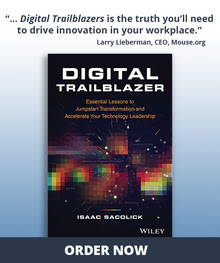
What’s one place CIOs and CFOs can start developing a business, technology, experience, and data-centric relationship? Consider partnering on a roadmap of digital transformation centers of excellence. As I said in my new book, Digital Trailblazer, organizations will always be transforming.














Leave a Reply