

The construction industry’s aging workforce is a problem that general contractors, subcontractors, and trades must address. According to The Bureau of Labor Statistics’ 2023 data, 21% of the industry is over 55, while only 11% are under 25.

Meanwhile, the economy has added 670,000 construction jobs since January 2021, and construction businesses will need more workers to win projects funded by the Infrastructure and Jobs Act, one of the major drivers of new construction projects. Construction starts are projected to increase in the US and Canada through 2028, with the largest cumulative year-over-year increases in residential, engineering, and commercial construction.
Leaders from savvy construction companies recognize that shifting from gray work to dynamic work management can be a digital transformation force multiplier by delivering multiple strategic objectives in one program. Construction businesses that turn complex systems into simple work environments can help them beat the competition for new projects, improve margins, reduce safety risks, and meet sustainability objectives.
New talent expects empowering technologies
The key to driving digital transformation force multipliers starts with empowering the workforce with self-serving technologies, genAI capabilities, and jobsite productivity drivers. Even more significant is how successful digital transformation initiatives can be a significant differentiator in hiring new workers into the industry.
The 2024 Gen Z and Millennial Survey illustrates how important empowering technologies are for attracting young people to the industry. In the report –
- Over 80% of Gen Zs and millennials are frequent users of genAI and believe it improves how they work.
- Over 80% of people in this age group who are likely to recommend their company as a workplace report having the power to drive change in their organization.
- The top concerns of these generations include the cost of living, climate change, mental health, and personal safety.
In my recent post on how construction businesses can modernize with no-code dynamic work management, I shared three examples of how transforming inefficient gray work areas leads to improved jobsite safety, efficient equipment scheduling, and faster subcontractor onboarding.
Taking this one step further, below are three examples of how an organization’s commitment to modernizing technology, empowering employees with self-service capabilities, and promoting career development leads to a forward-looking hiring and retention strategy. I encourage construction business leaders to state these commitments in their digital transformation strategies.
1. Commit to technologies that improve jobsite safety
Here’s what gray work looks like regarding job safety functions: paper checklists, PDF forms, multiple SaaS tools that perform different functions, and overly generalized training. In all these examples, a hodgepodge of solutions sends a clear message to jobsite workers – that safety is a compliance checkbox requirement.
Beyond outfitting workers with the right safety equipment, below are three ways for construction company executives to leverage dynamic work management capabilities and demonstrate their commitment to jobsite safety
- OSHA recordkeeping and incident reporting streamlines OSHA 300, OSHA 301, and OSHA 300A reporting and enables workers to identify potential hazards.
- OSHA construction safety audit app helps to prevent safety and health hazards in a construction site in compliance with the OSHA construction industry requirements.
- Hazard identification risk assessment that surveys across 42 categories and classifies hazards into 30 types & 112 sub-types.
Leaders should commit to safety, communicate their objectives with employees and new hires, and implement technologies promoting worker safety.
2. Commit to best-in-class mobile and AI capabilities
There’s no excuse today for smaller construction firms not having tools to collaborate between jobsite workers and back office project management, finance, and other administrative functions. Even small construction projects can be complex with job-specific nuances, so rigid project management tools can be hard to adopt. An alternative approach is to leverage a project management starter app with a back office and easy-to-use mobile user experience, then empower the project manager to configure it to support their project’s requirements.
Empowering employees to experiment with technologies and develop solutions is a key recruiting differentiator. For midsized and larger construction companies, leveraging genAI capabilities is a clear sign to employees and recruits that the firm is committed to driving efficiencies, enabling smarter data-driven decision-making, and promoting employee-driven innovations.
One win-win is using gen AI to build apps, create reports, and develop integrations. Today’s employees are digital natives, and many technology capabilities can be developed by citizen developers, with IT providing governance and best practices. By promoting self-service technologies, automation, and AI capabilities, construction businesses will be better able to hire a new AI-native generation.
3. Commit to purposeful career development
In the 2024 Gen Z and Millennial Survey, over 86% of respondents said having a sense of purpose in their job is important for their job satisfaction and well-being. Work-life balance and learning and development opportunities were two of the top reasons respondents chose their organization, and lack of career advancement opportunities was the second most stated reason they left their previous organization behind compensation.
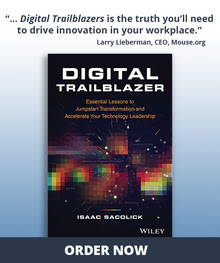
In my book, Digital Trailblazer, I tell the story of when I was CIO at McGraw Hill Construction (now Dodge Construction Network and BNP Media’s ENR and Architectural Record) and how our company president drove purpose into our work. He led a town hall and opened it with, “We build bridges, schools, hospitals, and office buildings. We fix roads, upgrade stadiums, and provide affordable housing.”
Construction is highly purposeful work, especially for organizations committing to sustainable construction methods, building smart buildings, and improving the country’s infrastructure.
Given the industry’s cyclical nature, what may be less obvious is how to provide career development programs to younger employees. Empowering employees with technologies that they can contribute to its development and enhancement should be a key tenet of career development and learning programs. Construction businesses that develop technology and AI as core competencies and provide learning opportunities to employees are more likely to attract and retain the talent needed to compete for the most lucrative project opportunities.
This post is brought to you by Quickbase.
The views and opinions expressed herein are those of the author and do not necessarily represent the views and opinions of Quickbase.














Leave a Reply