

I didn’t share my 2025 predictions because of my concerns they will come to fruition. Instead, I shared 20 expert AI predictions and advised what’s in and out of digital transformation.
If you joined some of the recent Coffee With Digital Trailblazers or read the follow-up blog posts from November, you would have heard me share my fearful predictions. The first two on my list below are already becoming a reality, and I reiterate them here in the hopes that leading Digital Trailblazers who care about them will add ways to impact them on their agendas.

Some good news is that I’ve had my share of blown predictions. I once challenged why Amazon was getting into the hosting business, when the cloud was just a concept. In another post, well before LLMs were available, I debated whether Ais would ever learn to code. Whoops.
There’s much to look forward to in 2025, but here are my concerns.
DEI goes from cold to pandemic
The headlines throughout 2024 illustrate how large enterprises are caving to pressure from activists, the media, and others around their DEI initiatives. Recent headlines include McDonald’s dropping diversity targets for employees and suppliers and Meta rolling back its DEI programs, while Costco stands resolute against the anti-DEI movement.
Review this timeline of other companies reducing their REI initiatives.
Research and data illustrate DEI’s impact on culture and innovation.
- McKinsey says diversity matters even more and reports a 39% increased likelihood of outperformance for those in the top quartile of ethnic representation versus the bottom quartile, and also a 39% increased likelihood of outperformance for those in the top quartile of women representation.
- Royal Academy of Engineering in The DEI Engine states that 30% reported that overall company morale improved after they made accommodations for disabled employees, while 21% reported higher overall company productivity.
- BCG says it’s time to highlight the business opportunity of DEI initiatives and reports that companies with above-average diversity on their management teams also reported innovation revenue 19% higher than companies with below-average leadership diversity.
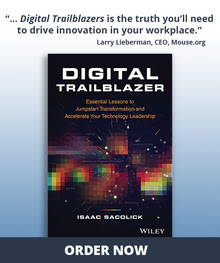
I share my stories and beliefs on the importance of DEI in Chapter 8 of Digital Trailblazer, covering transformative culture with diverse leaders and empathetic teams. “Hiring and nurturing diverse teams, creating an inclusive culture, and driving empathy are ongoing needs and essential to transformations. The mix of backgrounds, skills, drivers, and interests all play into how well teams collaborate and manage conflicts.”
HBR published how DEI can survive this era of backlash. I hope the data compelling DEI programs prevail, sentiment changes, and we avoid DEI going from cold to pandemic levels in organizations.
Hybrid and remote work ends in a crash
I made this fearful prediction after learning about Amazon’s announcement in September that employees must return to the office five days a week. Elon Musk plans to make a similar edict for federal employees, and JPMorgan is ending remote work for more than 300,000 employees.
This command-and-control throwback goes against the many studies showing that productivity, retention, and morale all improve when employees are trusted and provided remote work flexibility. Some examples:
- A recent report published in Nature on how hybrid working from home improves retention without damaging performance showed working from home cut attrition by 33% in one experiment.
- In The Conference Board’s Reimagined Workplace survey of over 200 HR leaders, 60% of workers surveyed say hybrid work has improved their productivity, and 51% of HR leaders cite increased productivity as a benefit.
- One Scientifics Report study shows the quality of new ideas suffered with hybrid working, but this study was conducted during the pandemic when hybrid collaboration methods were still being developed.
What’s eating at employees is the personal cost that five-day return-to-office policies cause. Using my case as an example, I would lose two hours a day commuting and spend around $800 per month covering travel, food, and dry cleaning costs if I worked for an employer that required me to return to a NYC office. My kids are older now, but unaccommodating return-to-office policies can significantly impact parents of younger kids or those providing care to elderly parents.
A Q4/2024 study shows that structured hybrid models, where employees follow set office schedules, now dominate at 43% of organizations — more than double the rate from early 2023 (20%). But when Amazon announced its five-day return mandate, 73% of surveyed professionals said they were reconsidering their positions.
I hope it doesn’t pan out this way, with more companies opting for return-to-office policies.
AI overinvestment brings on its second winter
The first AI Winter was from 1974 through 1980, and the second was between 1987 and 2000 when research and investment in AI dropped off because of overhype and lack of computing power.
I wonder whether we’re headed to a third winter and am concerned whether too much hype and overspending can continue at a time when other priorities like security and supply chain may require higher business priority.
Keep in mind that I am a strong proponent of AI investments but advise looking for more than productivity benefits. seeking transformational business value.
In August 2024, Gartner placed AI in the trough of disillusionment, and Goldman Sachs asked whether the $1 trillion in AI capital expenditures would pay off. According to AI at Wharton’s report on navigating gen AI’s early years, 72% of enterprises predict gen AI budget growth over the next 12 months but slower increases over the next two to five years.
Meanwhile, there have been some research setbacks, most notably OpenAI’s delayed release of GPT-5. “Estimates suggest a six-month training run for a new model can run about $500B in computing costs alone.”
Costs aren’t the only only headwinds. The models need more data and more energy. In a decade, we may look at today’s LLMs as energy-guzzling brute-forced data-chugging machines – and the question is whether they’ll hit a ceiling of capability or capacity.
I believe a winter is possible but unlikely. For one thing, many enterprises are still catching up to the existing AI capabilities, finding ways to create business value from gen AI, limping through all the change management needed to improve employee adoption, and catching up with AI governance.
“CIOs will be focusing on technologies that drive growth beyond basic productivity,” says Bogdan Raduta, head of AI at FlowX.AI. “AI-driven personalization will be key, enabling tailored customer experiences that boost loyalty and engagement. Advanced data analytics platforms will provide real-time insights, allowing companies to make agile, competitive decisions.”
There will be many secondary impacts if there is a third AI Winter. The major cloud providers have significantly invested in data center capacity, and if computing demand wanes, there is a chance for public cloud costs to rise. In addition, organizations that supported too much AI experimentation may find themselves working through mounds of technical debt, and CIOs should expect the emergence of AI debt challenges.
Again, I put this risk of an upcoming AI winter is low but possible. I have a poll on LinkedIn running to get feedback.
My biggest concern regarding underinvestment
Over the last five years, significant organizational focus has been on automating workflows and seeking productivity benefits from AI. But how well are organizations investing in their people, including leadership training, skills development, and other personal development programs?
One report forecasts the corporate training global market to grow from $398B in 2024 to $417B in 2025, a compound annual growth rate (CAGR) of 4.7%.
But, I’m skeptical about whether enterprises and SMBs will make these investments. According to another report, training per employee dropped from $1207 in 2022 to $774 in 2024, with the most significant drop in large enterprises with more than 10,000 employees dropping from $1689 in 2022 to $398 in 2024.
And AI at Warton’s report on navigating gen AI’s early years says, “Investment in training is more muted. Training, still seen as a key internal strategy in rolling out gen AI, is down from last year, seeming to indicate a more conservative posture.”
Is the rhetoric on the importance of investing in people or proclamations that people are the company’s most important asset all talk and no muscle? Are executives following through on the need to reskill employees because of AI, the skill gaps holding back companies from executing promising innovations, and the leadership gaps in leading digital transformation initiatives?
“When approaching leadership about AI upskilling, frame it as an investment in the company’s future competitiveness and use real-world examples of AI’s impact on software development cycles—faster time-to-market, reduced technical debt, and more innovative solutions,” says Artem Kroupenev, VP of strategy at Augury. “Given AI’s trajectory, it’s not just about improving current workflows—it’s about unlocking entirely new business models that wouldn’t be possible without AI integration.”
My biggest concern is that organizations are underinvesting in leadership training and skills development, and will only realize this learning debt in years to come.
I believe more organizations must commit to lifelong learning in mission, strategy, and investment. Organizations should consider these emerging gen AI leadership trends if they want to compete in this new era and succeed with their investments. Investing in skills is really important, but it’s not just the skills gap impeding innovation programs and growth.
I’m a pragmatist and borderline pessimist, and I hope I am wrong about these predictions.















Leave a Reply