

Category: Digital Trailblazers
-
Is AI Putting Your Leadership Job at Risk—or Opening Your Biggest Career Opportunity?
Reflecting on pivotal moments in careers and current industry shifts affecting Digital Trailblazers. Key factors include advancements in AI, a significant decline in VC funding, rising unemployment, and CEO turnover. These changes create uncertainties, impacting job security and prompting many to pursue entrepreneurship amidst challenging market conditions.
-
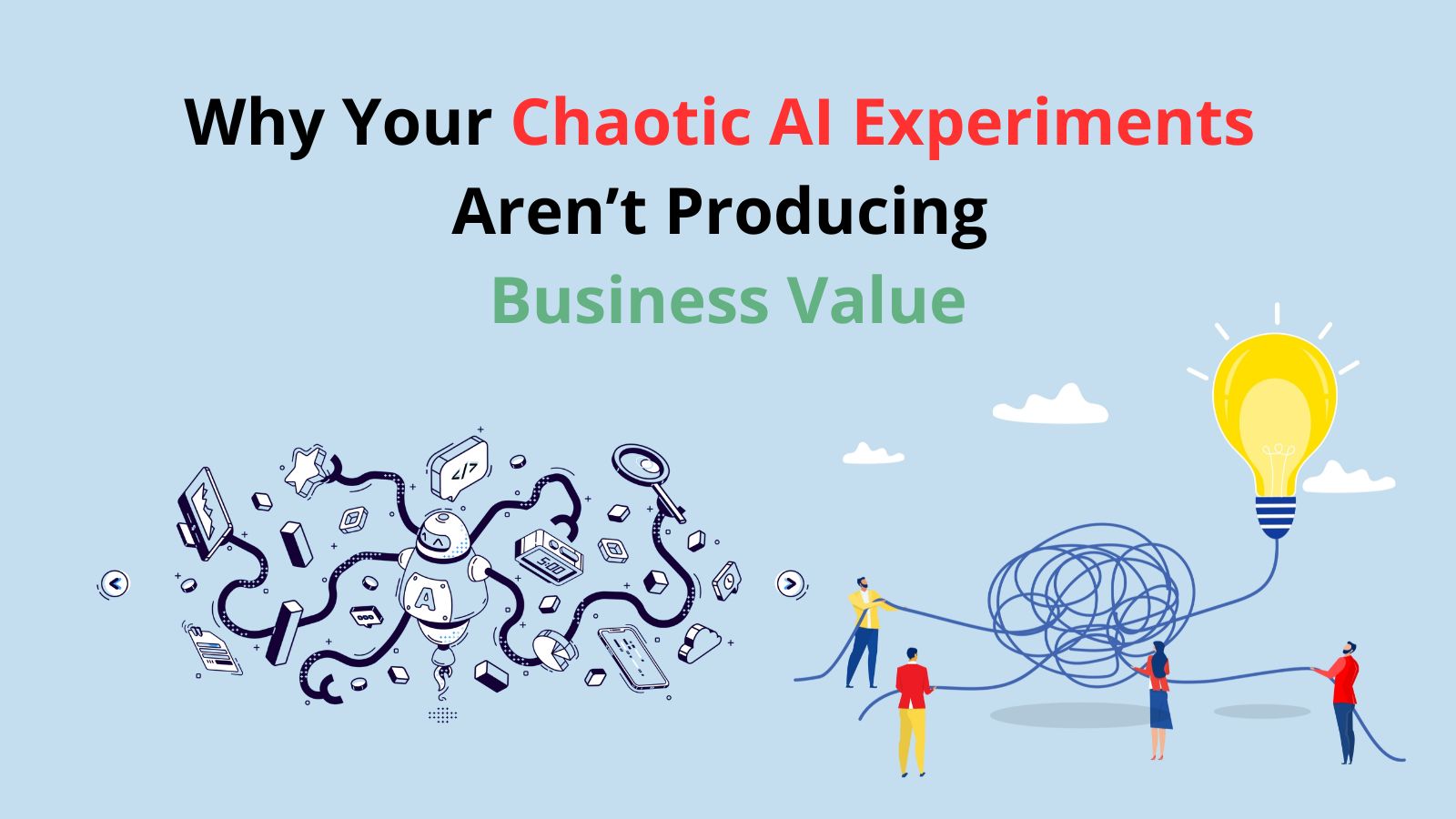
Why Your Chaotic AI Experiments Aren’t Producing Business Value
Organizations are grappling with AI strategy implementation, torn between extensive experimentation and focused deployment. A McKinsey report highlights that only a small percentage of companies scale AI effectively, with larger enterprises leading. The StarCIO Vision Statement Template offers a streamlined method for evaluating AI initiatives, supporting growth while minimizing risks and complexity.
-

AI Agents Transforming? Not Yet. Here is What CIOs Must Lead Now
While we are in the genAI era, many organizations have not achieved AI-driven transformation. Most AI agents drive efficiencies and are reshaping businesses, but not transforming their customer experiences. IT departments must evolve their practices to leverage AI effectively. Without significant changes in leadership, culture, and agile practices, businesses will be slow to achieve true…
-

My Top 2025 Books: Reads on Transformation, AI, and Mental Health
Isaac Sacolick reflects on his top 2025 books, highlighting reading experience on transformation, AI, and mental health. Books cover change management, scaling businesses, manufacturing, and AI leadership.
-

Resilient Reflections: A Candid Year of Loss, AI Insights, and Amazing Digital Trailblazers
As 2025 concludes, Isaac Sacolick reflects on personal challenges and achievements. Highlights include 150 episodes of Coffee With Digital Trailblazers, a successful LinkedIn course on digital transformation, and over 90 published articles. Plans for 2026 include personal trips and new thought leadership topics.
-
5 Practical Insights on Co-Creating With Innovation Partners in the AI Era
Isaac Sacolick with insights from Coffee With Digital Trailblazers experts reveals the importance of co-creation and partnerships in driving innovation,. He highlights how organizations should adopt flexible governance, align technical capabilities, and foster a standardized agile way of working among employees and partners to deliver AI innovations and improve processes effectively.
-
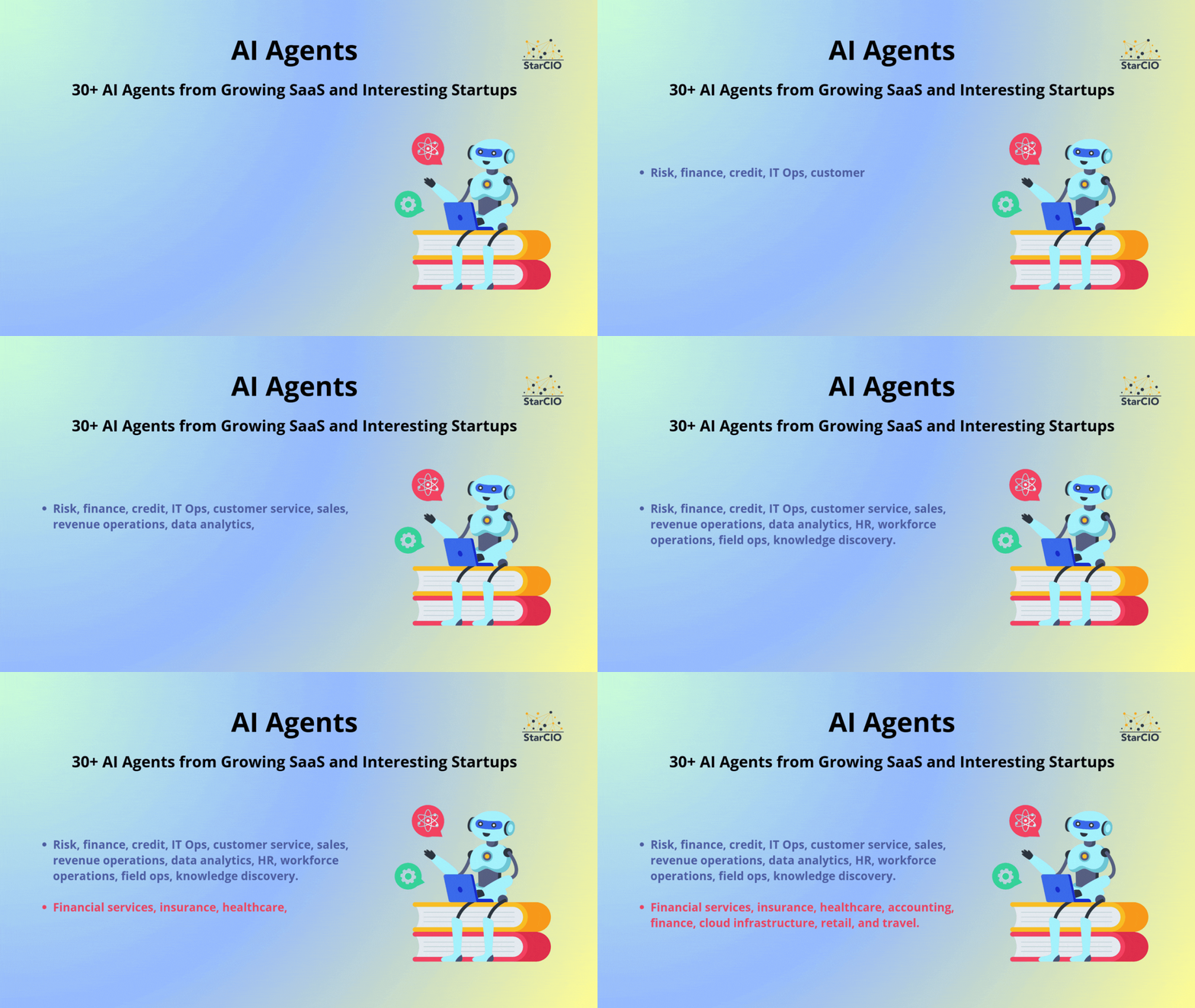
30+ AI Agents from Growing SaaS and Interesting Startups
Startups and growing SaaS, are developing AI agents that span chatbots, human-AI collaborations, and agentic AI automations. A comprehensive list categorizes these agents by industry and function, showcasing innovations that automate tasks across various sectors, such as finance, healthcare, and customer service, ultimately revolutionizing the workplace.
-

Courage to Adapt: The 20+ Leadership Hats CIOs, CISOs, and CDOs Wear
CIOs, CISOs, and CDOs must embody over 20+ distinct leadership roles to effectively adapt to varying scenarios. This includes responsibilities as visionary leaders, problem solvers, and crisis managers. Successful C-leaders develop situational awareness, balancing innovation with team support, and continuously navigating complex challenges in technology and organizational dynamics.
-
AI Digital Dexterity: Upskilling the Next Wave of Transformation Leadership
Digital dexterity is a crucial meta-skill for effective leadership in the genAI era. Leaders need adaptability, a willingness to experiment, and enhanced communication about AI’s role in their organizations. Emphasizing critical thinking and digital literacy is vital for preparing teams for AI’s rapid evolution, moving away from traditional management methods.
-

A Short Tribute to My Dad
We said goodbye to my Dad this weekend after his short battle with cancer. My dad was an introvert, but he was the life of the party with his jokes, speeches, and dancing. He was a trendsetter but often jumped into emerging trends too early; as a data scientist before the role had a name,…
-

How My Breakthrough Course Will Empower Digital Transformation Leaders in the AI Era
Digital transformation is now more crucial than ever in the AI era, shifting from a project mindset to an ongoing strategy for organizations. The introduction of AI enhances the need for continuous evolution in business operations, with leadership programs focusing on integrating AI, facilitating culture change, and tracking meaningful outcomes.
-

How to Kill Floundering Experiments and Drive an AI Learning Culture
The low success rate of AI and ML experiments, typically around 30%, often reflects a narrow focus on production deployment. Effective experimentation prioritizes an AI learning culture, value demonstration, and agile delivery methods. Best practices include setting clear success criteria, regular reviews, centralized documentation, and rewarding knowledge sharing to foster an agile AI learning culture.